Japanese
  English
  French
  German
  Spanish
  Portuguese
  Arabic
Buying 飲料ディスペンサー for a hotel, catering company, restaurant group, or hospitality distribution business involves more than comparing capacity and unit price. Buyers need to consider beverage type, service volume, material construction, cleaning requirements, dispensing components, appearance, and consistency across a bulk order.
For buyers sourcing 卸売飲料ディスペンサー, the right choice should fit the actual service environment while remaining practical to refill, clean, maintain, transport, and reorder. This guide explains the factors that matter most before selecting a product and confirming a wholesale order.
What Should You Confirm Before Buying Wholesale Beverage Dispensers?
Start with the application rather than the product catalog.
A hotel breakfast buffet serving juice has different requirements from a catering company transporting beverage equipment between event venues. A hospitality distributor may need several capacities and configurations to serve different downstream customers.
Before requesting a quotation, define:
- beverages to be served;
- expected serving volume;
- available counter or buffet space;
- frequency of refilling and cleaning;
- required number of beverage options;
- expected order quantity and customization requirements.
These factors determine which capacity, container configuration, structure, and finish are appropriate.
Beverage Type
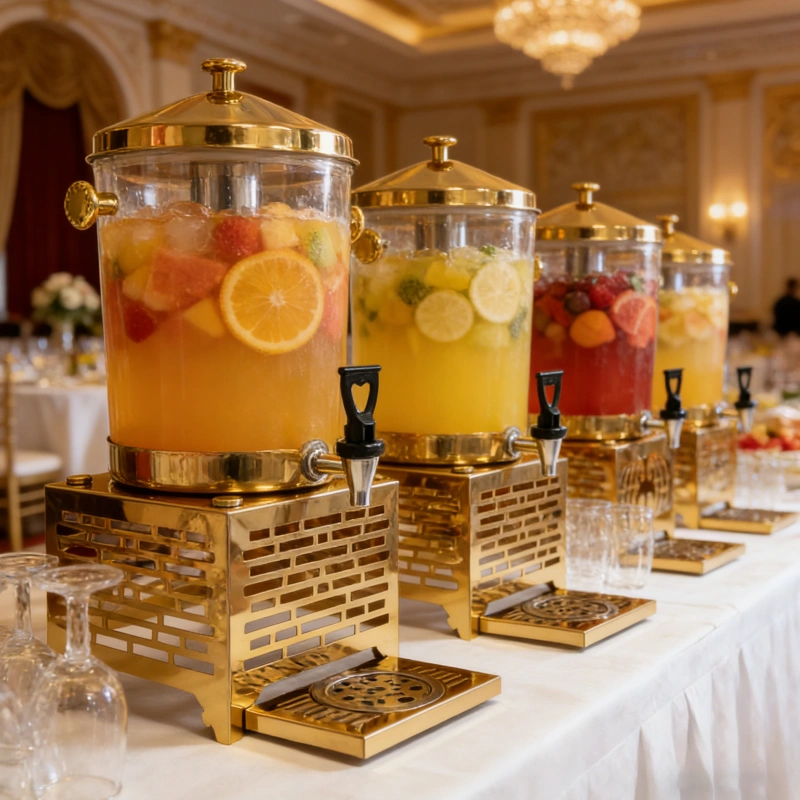
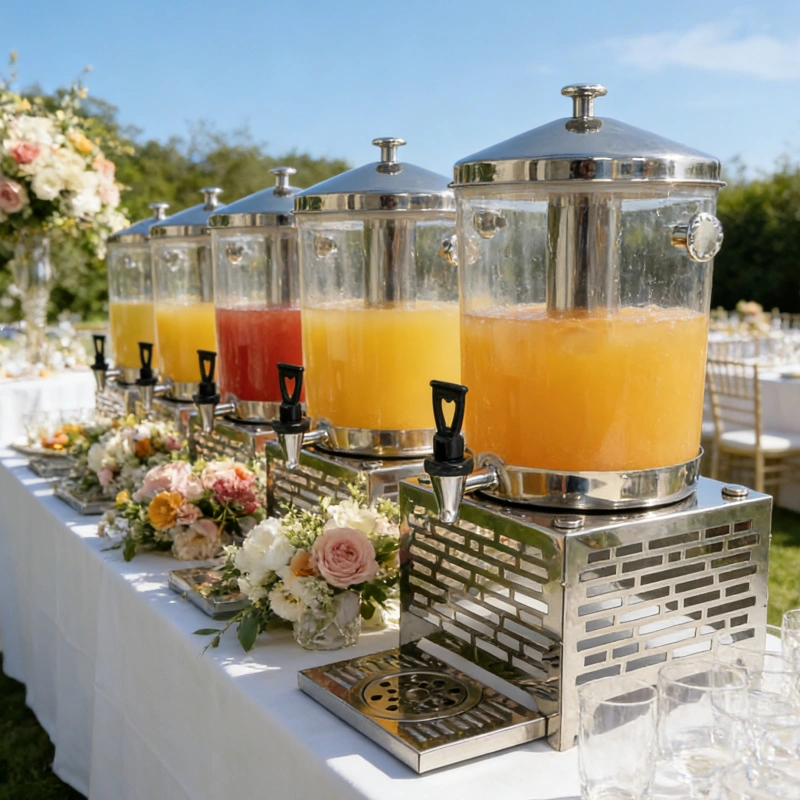
Water, juice, iced tea, fruit-infused water, and beverages containing pulp or small ingredients can create different dispensing requirements.
The outlet and faucet configuration should be suitable for the intended beverage. A structure that works well for plain water may not be equally practical for beverages containing suspended ingredients.
For this reason, buyers should tell the manufacturer what beverages will normally be served instead of selecting a dispenser based only on appearance and capacity.
Serving Volume and Refill Frequency
Larger capacity is not automatically better.
A larger container can reduce refill frequency, but it occupies more counter space and becomes heavier when filled. Smaller containers may be easier for staff to handle and can be more practical where beverages are replenished frequently.
Hotels should consider peak breakfast traffic and how often staff can refill the station. Catering companies should also consider transportation, setup, and event size.
The appropriate capacity should therefore be determined according to the actual service workflow.
Single or Double Beverage Dispenser: Which Is More Practical?
Container configuration affects both beverage variety and buffet space.
A single beverage dispenser is suitable when one main beverage is offered or when individual units need to be positioned independently.
A double beverage dispenser allows two beverages to be served within one coordinated station. This can be useful for hotel breakfast buffets offering two juice varieties or for catering setups where counter space needs to be managed efficiently.
More containers provide greater beverage variety, but they also increase cleaning requirements and occupy additional space.
For hotel and catering projects, beverage dispensers should therefore be selected as part of the complete buffet layout rather than as isolated equipment.
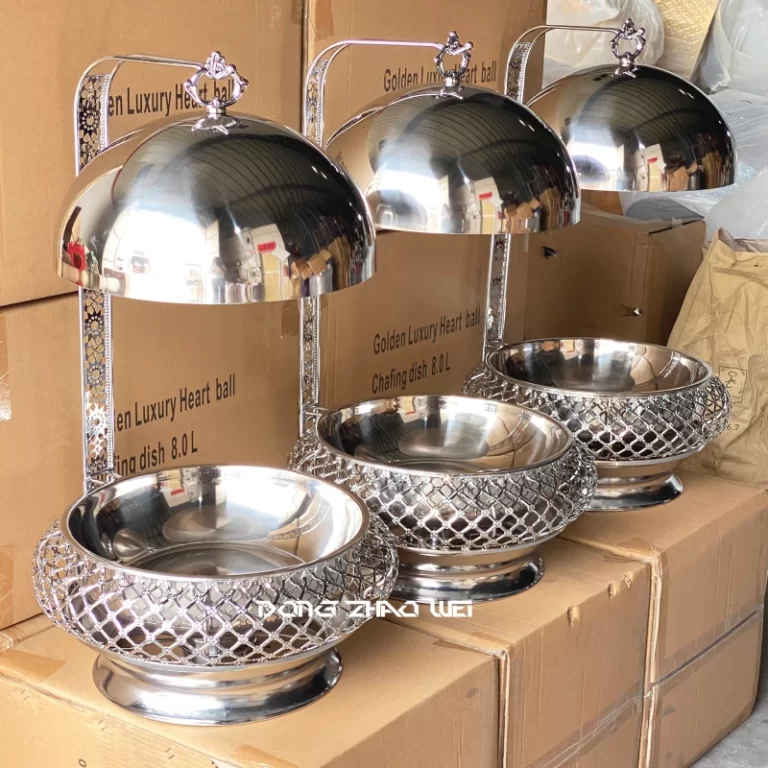
Consider how they will be positioned alongside チェーフィング・ディッシュ, cereal dispensers, tableware, food pans, and other buffet serving equipment.
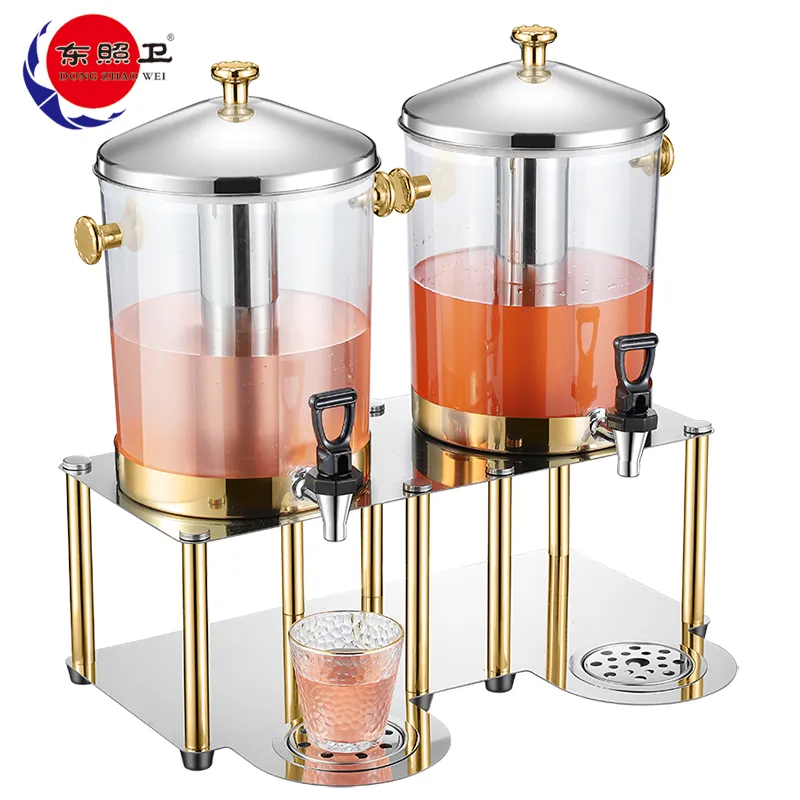
Material and Construction: What Actually Matters?
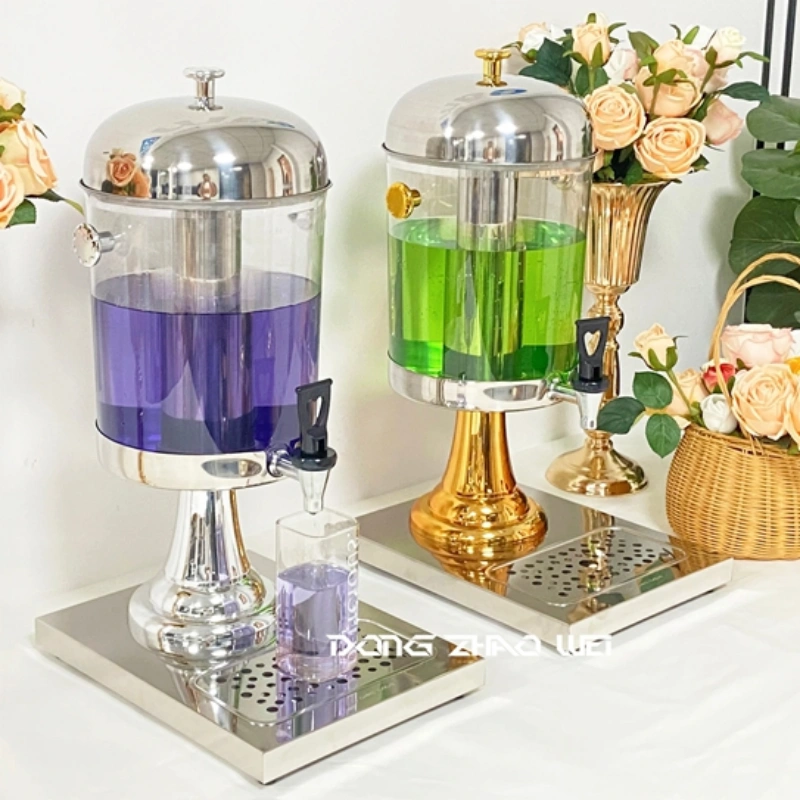
Commercial beverage dispensers usually combine several materials and components. Buyers should evaluate the entire structure rather than asking only whether the product contains stainless steel.
Stainless Steel Structure and Finish
Stainless steel may be used for frames, bases, lids, drip trays, supports, and other structural or decorative components, depending on the model.
For B2B procurement, buyers should confirm which components use stainless steel and what surface finish is applied.
Finish consistency becomes especially important when multiple beverage dispensers are installed together or purchased with other buffet equipment. Visible differences between products can affect the appearance of an otherwise coordinated hotel buffet.
For project orders, samples or approved product references can help establish the required appearance before bulk production.
Beverage Container
Transparent containers make it easy for guests and staff to see the beverage and remaining volume. They also form a major part of the dispenser’s visual presentation.
Container materials and structures can vary between models, so buyers should confirm the actual specification with the manufacturer.
Selection should take into account the intended service environment, transportation requirements, appearance, and target price range rather than assuming one material is suitable for every project.
Faucet and Drip Tray
Faucets and drip trays may appear to be minor components, but they directly affect daily operation.
The faucet should dispense smoothly and be practical to clean. Drip trays should be accessible for routine cleaning, while frequently handled components should remain stable during repeated use.
For bulk orders, buyers should ask whether commonly handled or replaceable components can be supplied separately.
A small functional issue becomes much more significant when repeated across dozens or hundreds of units.
How to Compare Wholesale Beverage Dispensers Beyond Price
Two beverage dispensers may look similar in product photos while differing in construction, components, finishing, packaging, and customization.
Comparing quotations only by unit price can therefore be misleading.
A practical B2B comparison should include:
| Purchasing Factor | What to Confirm |
|---|---|
| 定員 | Suitable for expected service volume and refill frequency |
| Configuration | Single, double, or other container arrangement |
| Materials | Container, frame, base, lid, faucet, and tray |
| Faucet | Operation, cleaning, and replacement availability |
| Finish | Appearance and consistency with other buffet equipment |
| Cleaning | Removable and accessible components |
| パッケージング | Protection for bulk transportation |
| Spare Parts | Availability of commonly replaced components |
| カスタマイズ | Logo, packaging, finish, or other available options |
| Order Terms | MOQ, samples, lead time, and mixed-model possibilities |
This makes it easier to identify why quotations differ and whether a lower price reflects a genuine purchasing advantage or simply a different product specification.
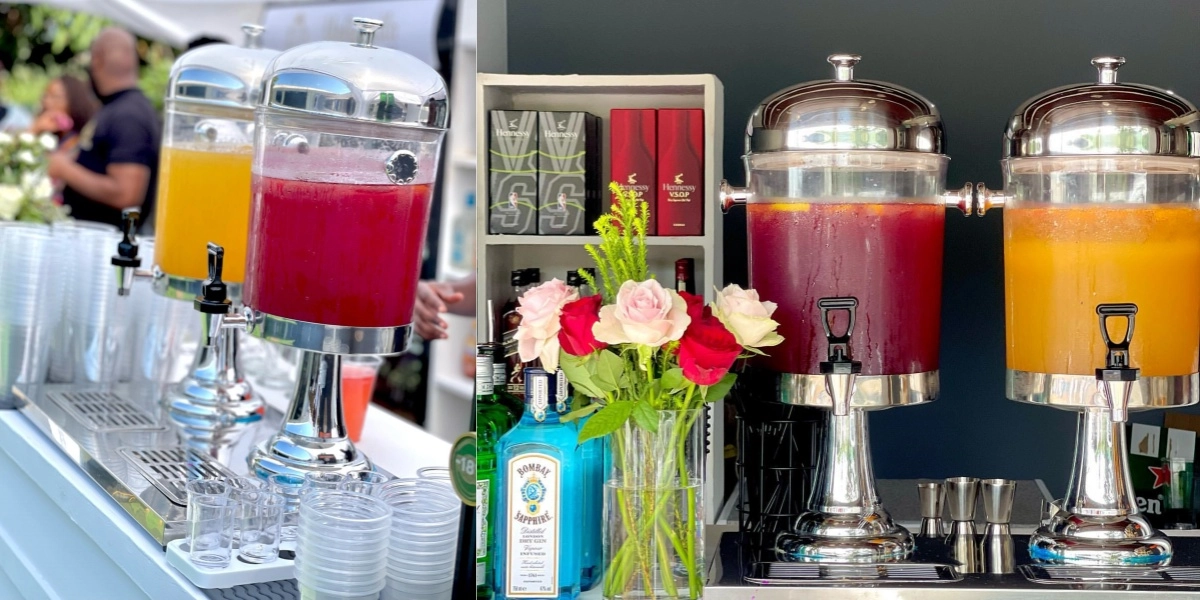
Cleaning and Maintenance Should Be Evaluated Before Ordering
Cleaning is especially important in hotel and catering environments because beverage dispensers may be used repeatedly throughout the week.
Containers need to be refilled, faucets are operated frequently, and drip trays collect spills. Staff must then disassemble and clean the relevant components after service.
Buyers should therefore confirm how the dispenser is cleaned before placing a bulk order.
Ask which components can be removed, how the faucet area is accessed, and whether replacement components are available.
For larger hotel projects or repeat purchasing programs, ordering a sample and testing it under actual service conditions can be more useful than relying only on product photographs. Staff can evaluate filling, dispensing, cleaning, assembly, and storage before the model is approved for a larger order.
Why Consistency Matters in Bulk Beverage Dispenser Orders
Purchasing one dispenser and purchasing hundreds create different quality-control requirements.
For wholesale orders, buyers need consistency in dimensions, appearance, finish, components, assembly, and packaging.
This is particularly important when multiple units are installed in the same hotel or sold through the same distributor product line. Differences that appear minor on individual products can become obvious when several units are displayed side by side.
Before mass production, buyers should confirm the approved product specification with the manufacturer.
For customized orders, logos, finishes, packaging, accessories, and other agreed details should also be clearly defined before production begins.
Manufacturer evaluation should therefore consider not only whether a supplier can produce the product, but also whether it can maintain the agreed specification throughout a bulk order and future repeat orders.
OEM/ODM Beverage Dispensers: How Much Customization Do You Need?
Not every hospitality buyer needs a completely new beverage dispenser.
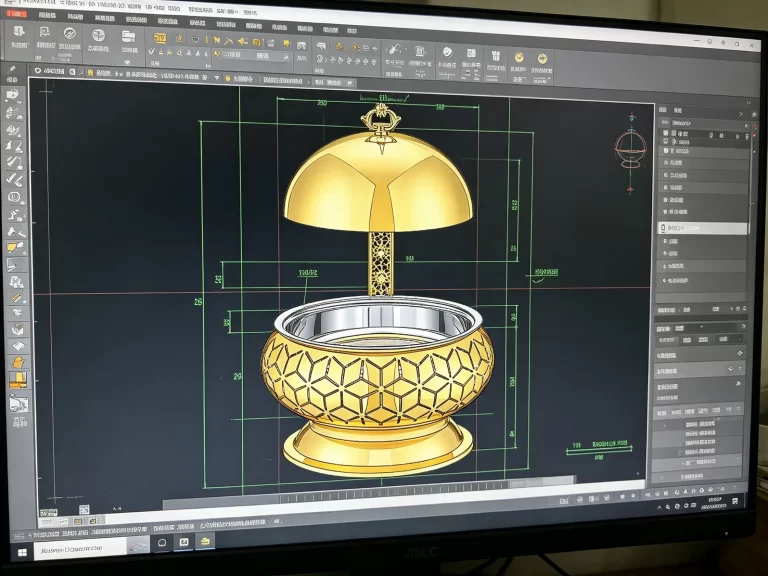
For distributors, private-label brands, and hospitality suppliers, modifying an existing model can often be more practical than developing a new structure from the beginning.
Depending on the selected product and manufacturing feasibility, customization may include branding, packaging, surface appearance, product combinations, or selected product details.
More substantial structural changes may require additional development, samples, tooling, or different order requirements.
Buyers should therefore distinguish between branding customization そして product development.
If the goal is to introduce an existing dispenser under a private label, logo and packaging changes may be sufficient. If the product needs a different structure, capacity, component arrangement, or appearance for a particular hospitality project, a more detailed OEM/ODM evaluation may be required.
Providing reference images, target applications, expected quantities, and specific modification requirements helps the manufacturer evaluate feasibility more accurately.
Buying for Hotels, Catering Companies, and Distributors
Different B2B buyers should place different priorities on the same beverage dispenser.
Hotels usually need to balance visual presentation with daily operation. Beverage dispensers should coordinate with the overall buffet setup while remaining practical for staff to refill and clean. Hotel groups purchasing for multiple properties may also benefit from standardizing selected models for easier repeat procurement.
ケータリング会社 should pay greater attention to handling and transportation. Dispensers may be moved between venues frequently, so dimensions, assembly, packaging, cleaning, and setup requirements all affect usability.
Hospitality distributors and wholesalers need a product range that serves different downstream buyers without creating unnecessary inventory complexity. Offering selected capacities, single and double configurations, and coordinated product designs can be more manageable than stocking many unrelated models.
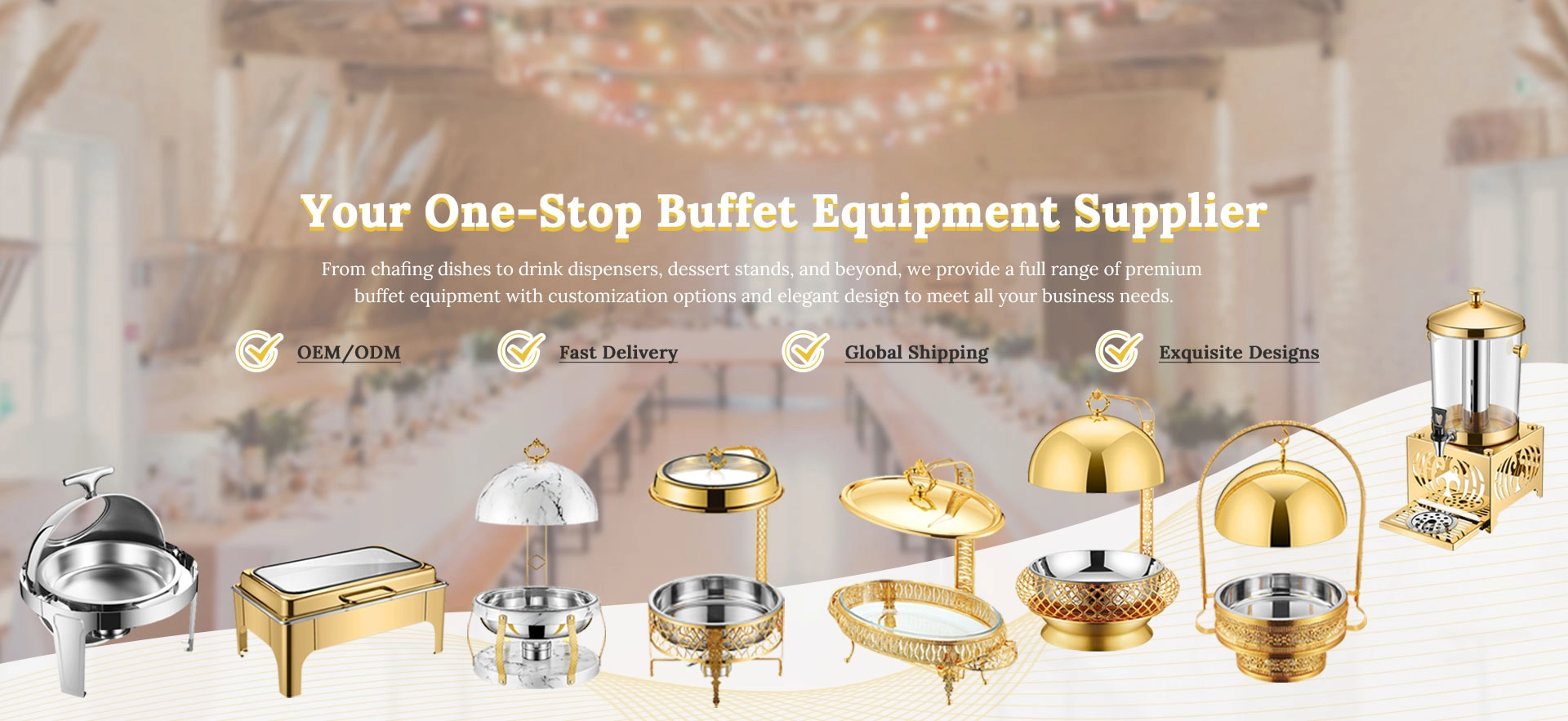
For buyers sourcing a broader serving range, Dongzhaowei’s ビュッフェ設備 can provide a natural next step for comparing complementary products.
Questions to Ask a Beverage Dispenser Manufacturer
A useful RFQ should go beyond asking for price and MOQ.
Before ordering, confirm questions such as:
- What capacities and configurations are available?
- What materials are used for the main components?
- Are single and double beverage dispensers available?
- Which parts can be removed for cleaning?
- Are replacement faucets or other components available?
- What finish options are available?
- Can logos or packaging be customized?
- What types of OEM/ODM modifications can be evaluated?
- Can samples be supplied before bulk production?
- How are approved specifications controlled during production?
- What packaging is used for bulk transportation?
- Can beverage dispensers be purchased with other buffet equipment?
Providing the manufacturer with your application, expected quantity, target market, and customization requirements will usually result in a more meaningful quotation than simply requesting a price list.
Wholesale Beverage Dispensers from Dongzhaowei
Dongzhaowei supplies 飲料ディスペンサー and related buffet serving products for B2B hospitality purchasing.
For hotels, catering companies, distributors, and hospitality equipment buyers, product selection can be discussed according to the required dispenser configuration, application, order quantity, appearance, packaging, and applicable customization requirements.
Rather than evaluating a beverage dispenser as an isolated product, buyers sourcing several types of buffet equipment can also consider how beverage dispensers coordinate with food serving and presentation equipment.
For private-label or project purchasing, OEM/ODM requirements can be evaluated according to the selected model and level of modification required. Buyers should provide Dongzhaowei with reference products, intended applications, quantities, and specific customization requirements so that suitable options can be assessed before an order is confirmed.
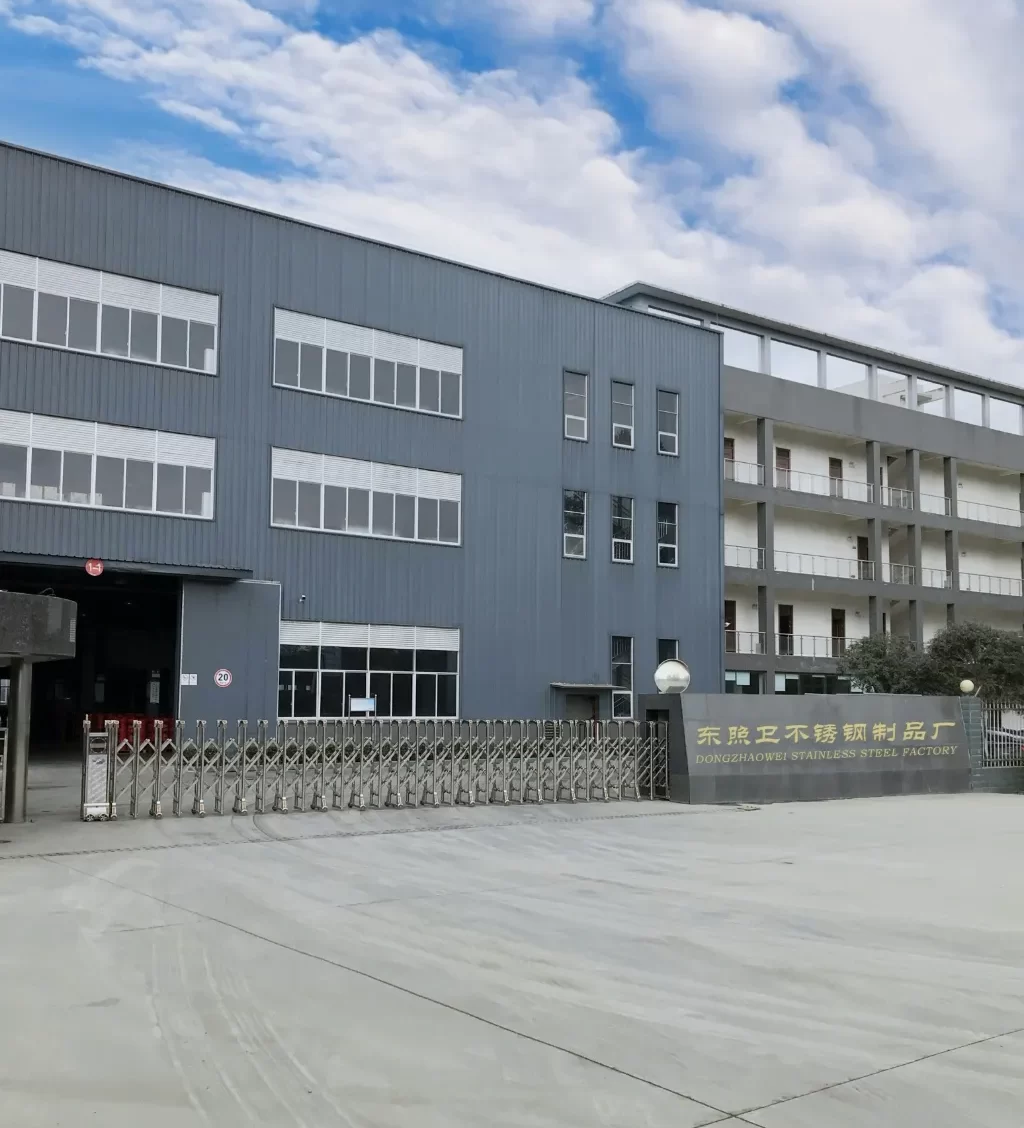
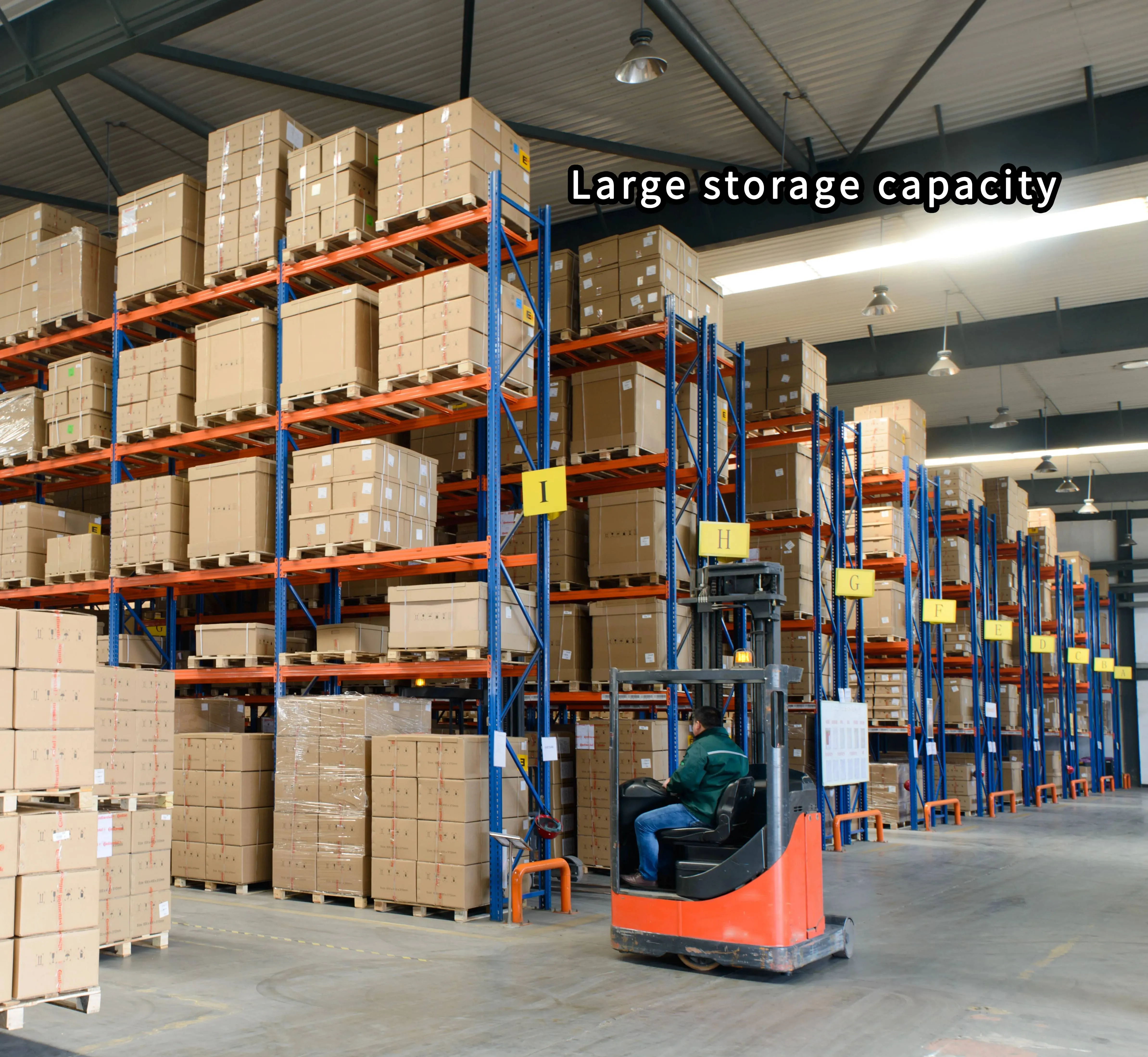
Buyers who want to evaluate Dongzhaowei’s broader manufacturing and supply capabilities can also visit the Dongzhaowei manufacturer profile before discussing a project.
結論
右 卸売飲料ディスペンサー should be selected according to how they will actually be used—not simply by capacity, appearance, or the lowest quotation.
Hotels need to consider buffet presentation, service volume, refilling, and cleaning. Catering companies also need to account for transportation and setup. Distributors need a product range that covers different customer requirements while remaining practical to stock and reorder.
Across all three buyer types, the most important purchasing factors remain consistent: appropriate capacity, practical container configuration, reliable dispensing components, suitable materials, easy maintenance, specification consistency, and a clear bulk-order process.
When requesting a quotation, provide your beverage application, preferred capacity and configuration, expected order quantity, target market, and OEM/ODM requirements.
Dongzhaowei へのお問い合わせ to discuss your wholesale beverage dispenser requirements and evaluate suitable product configurations, customization options, and complementary buffet equipment for your hotel, catering, or distribution program.